
Fayette County’s geography, climate, and development patterns create conditions that support a wide range of pest species. Lexington sits at the center of the Inner Bluegrass region—an area characterized by limestone-rich soil, abundant surface water, mature tree cover, and a climate that produces warm, humid summers and mild winters. Residential properties back up against horse farms, creek corridors, wooded lots, and commercial greenspace. All of these factors shape which pests are present, how abundant they are, and how they interact with homes.
This guide covers the pest species Fayette County homeowners are most likely to encounter, the conditions that support them, and the signs that a pest problem needs professional attention. X-iT Pest & Wildlife Solutions provides residential pest control throughout Lexington and Fayette County, serving homeowners dealing with each of the species described below.
Ants
Ants are the most frequently reported pest in Lexington homes, and several species are well-suited to Central Kentucky’s conditions and the typical residential landscape.
Odorous house ants are the species most often encountered trailing along countertops, baseboards, and cabinet edges. They earn their name from the rotten coconut odor they release when crushed. Colonies can number in the tens of thousands and maintain multiple satellite colonies, which is why surface sprays often provide only temporary relief. When the main colony is not addressed, trails resume within days.
Pavement ants nest under slabs, sidewalks, and driveway edges and enter homes through expansion joints and foundation gaps. They are most visible in spring and early summer when colonies are actively foraging.
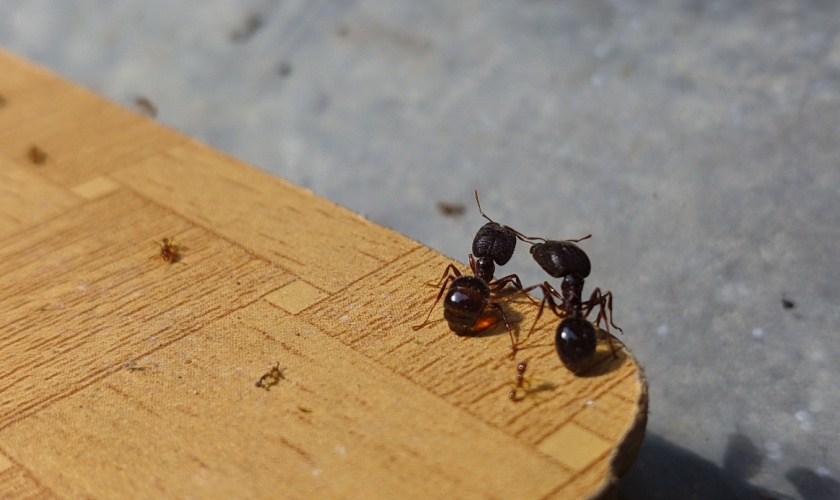
Carpenter ants are a structural concern rather than just a nuisance. They are among the largest ant species in Kentucky—black or bi-colored and up to three-quarters of an inch long—and they excavate galleries inside moist or softened wood. They do not consume wood, but the tunnels they create weaken structural members over time. Carpenter ant activity in a home often points to a moisture problem: wet framing around roof leaks, poorly ventilated crawl spaces, or deteriorating deck lumber.
Little black ants are a small species that commonly infests kitchen areas, particularly around grease residue and sweet materials. They are opportunistic foragers and can establish satellite colonies in wall voids close to food sources.
For a detailed look at ant species active in this area, see The Most Common Ant Species Found Around Lexington Properties.
Spiders
Lexington’s climate supports a diverse and abundant spider population. Spiders are predators that follow their prey, so a high spider count in or around a home is generally an indicator of broader insect activity inside the structure.
Common house spiders and cellar spiders are the species most frequently encountered indoors, typically in basements, corners, and utility spaces. They are not a health risk but are a persistent nuisance.
Wolf spiders are large, fast-moving ground hunters that regularly enter homes through gaps at the foundation level, particularly in fall. Their size startles homeowners, but they are not aggressive. They are drawn indoors by warmth and the presence of prey insects.
Brown recluse spiders are present in Kentucky and are found in Fayette County. They prefer undisturbed, dry environments—storage boxes, clothing left on the floor, spaces behind and under furniture, and attic areas. Brown recluse bites are medically significant and can cause tissue necrosis in some cases, though bites are uncommon and typically occur when the spider is trapped against skin. Positive identification is important: the brown recluse has a distinctive violin-shaped marking on its cephalothorax and six eyes arranged in three pairs rather than the typical eight-eye arrangement.
Rodents
Mice and rats are year-round concerns in Fayette County, with activity peaking in fall and winter when outdoor conditions push them toward structures.
House mice are the most common rodent pest in Lexington homes. They are small—typically three to four inches in body length—and can fit through gaps as small as a quarter inch. They are prolific breeders, producing five to ten litters per year under favorable indoor conditions. A single pair of mice can produce dozens of offspring within a few months. They contaminate food, damage insulation and wiring, and leave droppings throughout their foraging range.
Norway rats are larger and typically associated with basements, crawl spaces, and exterior burrow sites near structures. They enter through gaps around plumbing penetrations and foundation cracks. Norway rats are strong gnawers and can create or enlarge entry points over time. They are also capable swimmers and are associated with sanitary sewer systems in urban areas, which is relevant in older parts of Lexington.
Roof rats are less common than Norway rats in Central Kentucky but are present. They prefer elevated harborage—attic spaces, overhead utility lines, and upper structural areas—and are more commonly associated with warmer climates, though their range has expanded northward.
Termites
Eastern subterranean termites are widespread throughout Fayette County and represent one of the more costly pest threats homeowners face. Unlike most pest species that are visible when active, termites work inside wood and below ground, and infestations often go undetected for years.
Subterranean termites live in underground colonies and travel to wood through mud tubes—pencil-thin tunnels built from soil, debris, and termite secretions—which they construct along foundation walls, piers, and other surfaces connecting soil to wood. Finding mud tubes on a foundation wall is a reliable indicator of active termite presence.
Fayette County’s soil retains moisture well, which creates favorable conditions for termites. Crawl space construction, which is common throughout Lexington and the surrounding area, puts soil in close proximity to the wood framing of the home—exactly the conditions where subterranean termites thrive.
Swarm season in Central Kentucky runs from late March through May. If winged termites or piles of discarded wings are observed near windows, doors, or interior spaces, a professional inspection is warranted.
Mosquitoes
Lexington’s warm, wet summers and abundant green space make it a productive environment for mosquitoes from May through October. The region’s rainfall and the presence of creek corridors, retention ponds, horse farm water features, and residential drainage issues all contribute to available breeding habitat.
The primary public health concern with mosquitoes in Kentucky is West Nile virus, which is transmitted by Culex mosquito species. Eastern equine encephalitis is also present in the region, though human cases are rare. Mosquito populations in Fayette County are high enough each summer that outdoor activity in the evening hours—particularly in yards with standing water or mature tree cover—carries consistent exposure risk.
Stinging Insects
Yellow jackets, paper wasps, and bald-faced hornets are all common in Fayette County and all capable of delivering painful stings. For individuals with venom allergies, encounters can be life-threatening.
Paper wasps build open, umbrella-shaped nests under eaves, in door frames, and inside shutters. They are relatively docile unless the nest is disturbed directly.
Yellow jackets are more aggressive and more dangerous in aggregate. They nest in the ground, in wall voids, and in protected structural spaces. Ground nests are the most hazardous—homeowners striking a nest with lawn equipment can trigger a rapid defensive response from hundreds of workers. Yellow jacket colonies reach their largest size in August and September.
Bald-faced hornets build large, enclosed paper nests, typically suspended from tree branches or building eaves. Colony size can reach 700 or more workers by late summer, and the species is highly aggressive when the nest is threatened.
Cockroaches
Two cockroach species are commonly encountered in Fayette County homes: the American cockroach and the German cockroach.
American cockroaches are large—up to two inches—and are primarily associated with basements, crawl spaces, utility areas, and exterior drainage structures. They enter homes through floor drains, pipe penetrations, and gaps at the foundation. They prefer moisture and warmth and are more likely to be seen in lower levels of the home.
German cockroaches are the more serious infestation risk. They are smaller, reproduce rapidly, and establish themselves inside kitchen and bathroom cabinetry where warmth, moisture, and food residue are accessible. A German cockroach population can grow from a few individuals to hundreds within weeks. They are associated with food contamination and are a known allergen source. German cockroach infestations require targeted, professional treatment—over-the-counter products rarely eliminate an established population.
When to Call a Professional
Pest activity in Fayette County follows predictable seasonal patterns, but the threshold for calling a professional is not defined by season—it is defined by the type of pest and the nature of the activity. Termites, carpenter ants, German cockroaches, and rodents all warrant professional attention as soon as activity is confirmed. These species cause structural damage, contaminate food, or reproduce rapidly enough that delays meaningfully worsen the outcome.
For seasonal pest activity—ants, mosquitoes, spiders, and stinging insects—a recurring treatment plan calibrated to the local pest calendar provides the most consistent protection. X-iT Pest & Wildlife Solutions serves Fayette County homeowners with inspection, treatment, and ongoing protection plans designed around the pest species and seasonal conditions specific to Central Kentucky. Schedule an inspection to have your property evaluated and get a plan in place before the next wave of activity begins.