
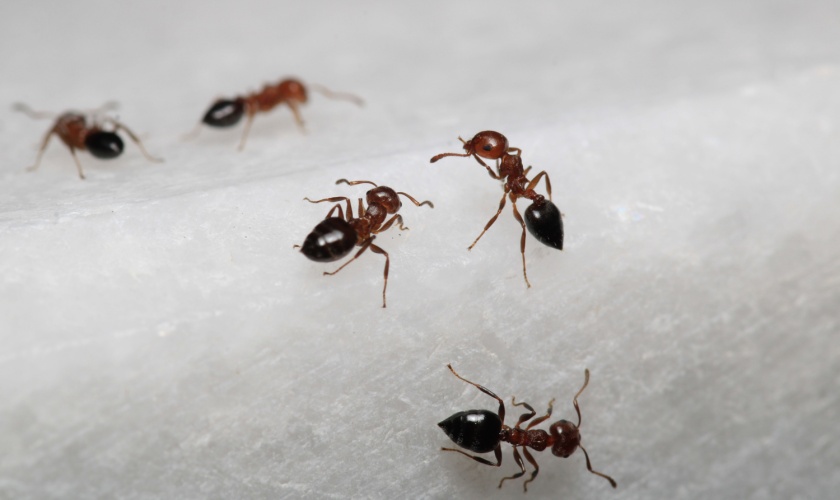
When homeowners talk about Lexington ant control, they’re often dealing with more than just a few stray insects. Ants in Lexington, KY thrive in Central Kentucky’s climate, and different species bring different challenges. Knowing which ants are most likely to invade your home or yard helps you spot problems early and protect your property.
Little Black Ants
These tiny ants are among the most common ants in Kentucky homes. Shiny and pinhead‑sized, they march in long trails toward food crumbs or grease. Colonies can grow massively, nesting in soil, cracks, and walls. While they don’t cause structural damage, their sheer numbers make them frustrating to eliminate without professional help.
Little black ants are especially persistent because they can nest in multiple locations at once. Even if one colony is treated, satellite colonies may remain hidden in walls or foundations, quickly repopulating the area. This makes them one of the most stubborn household invaders.
Carpenter Ants
Unlike little black ants, carpenter ants are large and destructive. They hollow out damp or decaying wood to build nests, which can weaken beams, decks, and siding. Spotting sawdust‑like material near wood is often a sign of their activity. Left untreated, carpenter ants can compromise the integrity of your home.
Carpenter ants don’t eat wood—they excavate it to create tunnels. This means their damage is often hidden until it becomes severe. Because they prefer moist environments, leaks or water‑damaged areas are prime targets, making regular home maintenance essential to prevention.
Odorous House Ants
Small and brownish-black, these ants are notorious for the foul smell they release when crushed—often compared to rotten coconut. They prefer kitchens and pantries, where they forage for sweets. Their colonies can split and spread, making them difficult to control once established indoors.
Odorous house ants are highly adaptable, able to nest in soil, walls, or insulation. Their ability to relocate quickly when disturbed makes DIY treatments ineffective. Once they find a reliable food source, they can return repeatedly, even after surface cleaning.
Pavement Ants
True to their name, pavement ants nest under sidewalks, driveways, and foundations. They push soil up through cracks, leaving small mounds that are easy to spot. While they’re less aggressive than fire ants, they can still invade homes in search of food, especially during warmer months.
Pavement ants are particularly common in urban and suburban areas where concrete structures provide ideal nesting spots. Their colonies can contain thousands of workers, and they often fight with rival colonies, leaving visible ant battles near sidewalks or patios.
Red Imported Fire Ants
One of the most dangerous ant species in Lexington, fire ants are reddish brown and highly aggressive. They build large mounds in yards and fields, and their painful stings can pose risks to pets and children. Fire ants are a serious outdoor threat that requires immediate attention.
Beyond their painful stings, fire ants can damage crops, electrical equipment, and even livestock. Their colonies expand rapidly, and disturbing a mound can trigger a swarm attack. This makes professional intervention the safest option for removal.
Field Ants
Often seen in lawns and gardens, field ants are larger than pavement ants and build visible mounds. While they rarely invade homes, they can disrupt landscaping and make outdoor spaces less enjoyable.
Field ants are known for their aggressive defense of nests, biting when disturbed. Their mounds can grow large enough to interfere with mowing or gardening, and they sometimes damage plant roots. While less harmful indoors, they can still be a nuisance outdoors.
Recognizing Ant Infestation Signs
Even if you’re unsure which species you’re dealing with, certain clues suggest a growing colony:
- Persistent ant trails: When you see ants moving in organized lines toward food or water, it usually means a well‑established colony is nearby, not just a few strays.
- Soil mounds near foundations or sidewalks: Pavement ants and fire ants often push soil upward, leaving small piles that mark the entrance to their nests. These mounds can expand quickly if ignored.
- Sawdust or wood shavings indoors: Carpenter ants don’t eat wood, but they excavate it to build tunnels. Finding fine debris near baseboards or beams is a strong indicator of hidden structural damage.
- Winged ants inside the home: Swarmers are reproductive ants that leave the colony to start new ones. Spotting them indoors suggests a mature colony already exists within or very close to your property.
- Unusual odors when ants are crushed: Odorous house ants release a distinct rotten coconut smell. If you notice this, it’s a clear sign of their presence and potential spread.
- Painful stings outdoors: Fire ants defend their mounds aggressively. If you or your pets are stung while in the yard, it means their colony is active and expanding.
- Sudden increase in ant activity after rain: Moisture often drives ants indoors, especially little black ants and odorous house ants. A spike in sightings after storms can reveal hidden entry points.
Recognizing these signs early is critical. Ant colonies grow quickly, and what starts as a few scouts in the kitchen can escalate into a full infestation. Acting promptly helps prevent costly damage and keeps your home safe.
Ant Defense Starts at Home
Ant infestations vary in severity, but all can disrupt daily life. Carpenter ants weaken wood, odorous house ants contaminate food, and fire ants make outdoor spaces unsafe. Each species brings its own risks, and ignoring the early signs often allows colonies to expand beyond control. Acting quickly is the best way to safeguard your home and yard.
For families throughout Central Kentucky, expert guidance ensures infestations are solved thoroughly instead of resurfacing again and again. Contact X‑iT Pest and Wildlife Solutions today to schedule a detailed inspection and receive a customized plan for your property. Our team combines local expertise with proven methods to eliminate colonies and keep them from coming back. With guaranteed service and a commitment to customer care, we’re the trusted partner for keeping Lexington homes ant-free.