
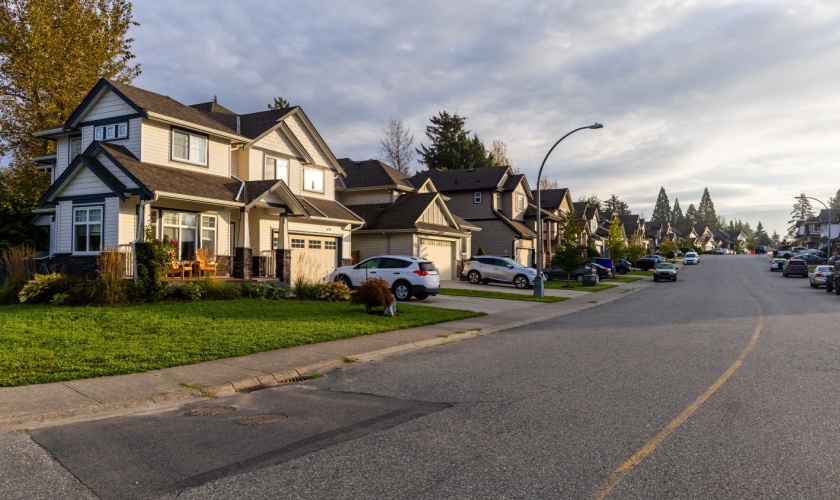
The residential community of Firebrook in Lexington is full of custom-built homes set on quiet cul-de-sacs, with mature trees, a community pool and clubhouse, and the kind of established neighborhood atmosphere that families seek out. But Firebrook homeowners also deal with more than their share of spider and wasp activity, particularly from late spring through early fall. If you have noticed webs accumulating along the eaves, spiders appearing in the garage and basement more frequently, or wasp nests building around the home every season, the reasons are tied directly to the features that make Firebrook so appealing.
What Drives Spider Activity in Firebrook
Firebrook’s mature landscape is the primary factor. The community’s established trees, professional landscaping, and proximity to green space and natural areas support a healthy ecosystem of insects at the ground level. Crickets, beetles, ants, moths, and other small invertebrates thrive in the mulch beds, leaf litter, and soil that surround Firebrook homes. That insect population is what sustains the spider population.
Wolf spiders, the large ground-hunting species that homeowners most frequently encounter in garages and basements, are directly proportional to the ground-level insect density. More crickets and beetles on the property means more wolf spiders living at and around the foundation.
Cellar spiders and common house spiders are drawn to the interior spaces where smaller insects concentrate—basements, garages, window frames, and utility rooms. In Firebrook homes with walkout basements—a common feature given the community’s terrain—lower-level spider activity can be particularly persistent because of the additional entry points and higher humidity levels that basements provide.
Exterior lighting further amplifies spider activity. Firebrook homes with porch lights, landscape lighting, and post lights attract flying insects at night, which in turn attract web-building spiders. The result is a concentration of webs and spider activity around exterior doors, garage entries, and along the roofline.
What Drives Wasp Activity in Firebrook
Wasps are drawn to sheltered nesting locations and accessible food sources—and Firebrook provides both in abundance.
Paper wasps build nests under eaves, in soffits, behind shutters, under deck railings, and in the structural overhangs that are characteristic of Firebrook’s custom-built homes. The architectural details that give these homes character—covered porches, pergolas, and decorative gable vents—also provide ideal nesting sites.
Yellow jackets are ground nesters that establish colonies in landscaped beds, under mulch, in retaining walls, and in areas of the yard where soil is loose or disturbed. In Firebrook, where many homes have extensive landscaping and larger yards, yellow jacket encounters are common during mowing, gardening, and outdoor activities.
The mature trees and flowering plants throughout Firebrook also attract the insects that wasps feed on and feed to their developing larvae. Wasps are predators that hunt caterpillars, flies, and other soft-bodied insects—all of which are abundant in a well-landscaped, tree-heavy environment.
Reducing Spider and Wasp Activity
Homeowners can take several steps between professional treatments:
- Remove webs regularly from the exterior of the home, particularly around lights, doors, and under eaves
- Switch exterior lights near entry points to yellow bulbs
- Trim vegetation back from the home and keep tree branches from contacting the roofline
- Inspect for and remove small wasp nests early in the season before colonies grow
- Keep garage doors closed when not in use
- Reduce ground-level clutter in the garage and around the foundation
Professional treatment is the most effective long-term approach. A perimeter barrier treatment combined with targeted crack and crevice applications reduces the insect population that sustains spiders and creates a lethal zone that wasps must cross when approaching nesting sites on the home.
X-iT Pest & Wildlife Solutions provides year-round residential programs that cover both spiders and stinging insects as part of a comprehensive plan. Cobweb removal is included with every visit, keeping the exterior of the home clean and making it easier to monitor for new activity.
If spider webs and wasp nests have become a seasonal headache for your Firebrook home, schedule an inspection with X-iT Pest & Wildlife Solutions and get a plan in place before the next warm season brings them back.