
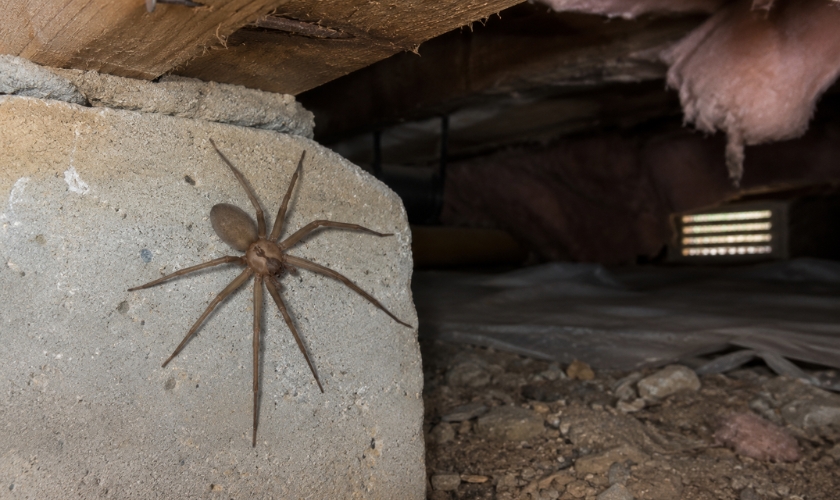
It’s not unusual for spiders to make themselves at home in the crawlspace beneath a Lexington property. Although these areas are often out of sight, they provide the shelter, stable conditions, and food sources that spiders naturally seek. Exploring the reasons behind this activity can also show why Lexington spider control is often focused on identifying and correcting the conditions attracting spiders rather than simply removing the ones that are visible.
Crawlspaces Provide the Darkness Spiders Naturally Prefer
Spiders are naturally drawn to environments where they can remain hidden from predators and disturbances, making crawlspaces an ideal place to settle. Unlike living areas that experience regular foot traffic, artificial lighting, and daily activity, crawlspaces often remain quiet and undisturbed for long periods. This lack of disruption allows spiders to establish webs, hunt for prey, and reproduce without frequently needing to relocate. Even species that do not build traditional webs often seek dark, protected spaces where they can rest during the day before becoming more active at night.
The absence of sunlight also contributes to stable environmental conditions beneath the home. Temperature fluctuations are generally less dramatic than outdoors, and the shaded environment reduces exposure to drying heat that can make some locations less suitable for spiders. Once they find a crawlspace with consistent shelter, many spiders continue using it as a reliable habitat while expanding into nearby corners, foundation walls, support beams, insulation, and stored materials. Over time, what begins as occasional spider activity can gradually become a much more established presence if the conditions remain favorable.
Moisture Creates an Environment That Supports Spider Activity
Many crawlspaces naturally experience higher moisture levels than the rest of the home. Water vapor rising from the soil, seasonal humidity, plumbing leaks, condensation around pipes, or inadequate ventilation can all contribute to damp conditions beneath the structure. While spiders are not necessarily searching for standing water, they benefit from environments where moisture helps sustain the insects they feed on. A crawlspace with elevated humidity often supports a more active ecosystem, creating a dependable food supply that encourages spiders to remain.
Moisture can also influence the overall condition of the crawlspace itself. Damp wood, mold growth, and decaying organic matter attract a variety of insects, including springtails, flies, beetles, and other small arthropods that serve as prey. As insect populations increase, spiders naturally follow because food becomes readily available without requiring extensive movement. Rather than entering a crawlspace simply because it is damp, spiders are responding to the thriving insect activity that moisture helps create, making humidity one of the most important factors behind long-term spider presence.
An Abundant Food Supply Keeps Spiders From Leaving
Spiders settle where they can consistently find food, and crawlspaces often contain a surprising number of insects throughout the year. Crickets, ants, beetles, flies, centipedes, sowbugs, and numerous other small creatures frequently enter these sheltered spaces through foundation gaps, utility penetrations, or naturally occurring openings around the home. Since crawlspaces provide protection from weather and predators, many of these insects remain active beneath the structure, creating ideal hunting conditions for spiders.
Unlike pests that rely on specific nesting materials or food sources, spiders simply follow available prey. A steady insect population allows them to remain in one location for extended periods because they rarely need to search elsewhere for meals. As insects continue reproducing or moving into the crawlspace from outside, spiders are able to establish multiple hunting areas throughout the space. This ongoing food cycle explains why simply removing visible spider webs rarely provides a lasting solution if the underlying insect activity remains unchanged.
Small Openings Give Spiders Easy Access Beneath the Home
Spiders do not need large openings to enter a crawlspace. Tiny gaps around utility lines, foundation vents, expansion joints, crawlspace doors, damaged screens, cracks in masonry, and spaces where building materials have shifted over time can all provide entry points. Because many spiders spend much of their lives outdoors, these small structural openings offer convenient pathways into a protected environment without requiring significant changes to the home.
Once inside, spiders can continue moving throughout the crawlspace while occasionally finding additional routes into basements, garages, or living spaces. Openings that admit spiders often allow insects to enter as well, further increasing the amount of available prey beneath the home. Seasonal temperature changes, normal settling, and weather-related wear can gradually enlarge these access points, making routine inspections valuable for identifying vulnerabilities before they contribute to more widespread pest activity.
Stored Items and Structural Features Create Ideal Hiding Places
Many crawlspaces contain more than exposed framing and utility lines. Stored boxes, unused building materials, insulation, pipes, ductwork, support posts, wiring, and other structural components create countless protected areas where spiders can remain concealed. These objects provide shaded surfaces for web construction while also offering protection from disturbances, allowing spiders to occupy spaces that are rarely inspected by homeowners.
Even crawlspaces that are primarily unfinished still contain numerous crevices where spiders can shelter between hunting periods. Loose insulation, stacked materials, corners around foundation walls, and gaps behind equipment all reduce exposure while making it difficult to detect spider activity during casual inspections. As clutter increases, so does the number of potential hiding places available beneath the home, allowing spider populations to establish themselves more easily without attracting immediate attention.
Minimal Human Activity Allows Spider Populations to Grow
Spiders thrive in places where they can remain undisturbed for extended periods, and crawlspaces are among the least visited areas of most homes. Unlike kitchens, hallways, garages, or other frequently occupied spaces, crawlspaces may go months without anyone entering them unless repairs or maintenance are needed. This lack of regular human activity gives spiders the opportunity to build webs, hunt insects, reproduce, and establish territories without constantly having their habitat disrupted. As a result, even a small number of spiders can gradually become a more noticeable population over time.
The limited attention crawlspaces receive also means early signs of spider activity often go unnoticed. Webs accumulate in corners, egg sacs remain undisturbed, and insect populations continue providing a reliable food source beneath the home. Because homeowners rarely inspect these spaces, spiders can continue expanding throughout support beams, foundation walls, insulation, and utility lines before their presence is discovered. Regular crawlspace inspections can help identify these conditions before spider activity becomes more widespread inside the home.
Changing What Makes Your Crawlspace So Appealing to Spiders
Keeping spiders out of a crawlspace requires more than removing the webs that are already there. Lasting results come from making the space less favorable for spiders and the insects they hunt. Focusing on the environmental and structural factors that encourage pests to settle beneath your home can significantly reduce the likelihood of future spider problems. Some of the most effective ways to accomplish this include:
- Repair moisture issues by fixing plumbing leaks, improving drainage, or controlling excess humidity that encourages insect activity.
- Seal foundation gaps and exterior openings around vents, crawlspace doors, utility penetrations, and cracks that spiders and insects can use to enter.
- Remove unnecessary clutter such as stored materials and debris that provide sheltered locations for hiding and web building.
- Reduce insect populations since a dependable food source is one of the primary reasons spiders remain in a crawlspace.
- Inspect the crawlspace periodically to catch new webs, moisture concerns, or developing structural issues before they become larger problems.
- Maintain proper ventilation to help create an environment that is less supportive of both insects and spiders.
Effective spider management begins with a thorough evaluation of what is happening beneath your home. X-iT Pest & Wildlife Solutions performs detailed crawlspace inspections to identify moisture concerns, structural vulnerabilities, insect pressure, and other contributing factors that may be encouraging spiders to settle. Using those findings, our pest professionals provide expert recommendations focused on creating a crawlspace that is less inviting to spiders and better protected against future infestations.
Once you know what’s making your crawlspace attractive to spiders, contact X-iT Pest & Wildlife Solutions to schedule a detailed crawlspace inspection and get expert guidance on reducing the factors that support spider activity.