
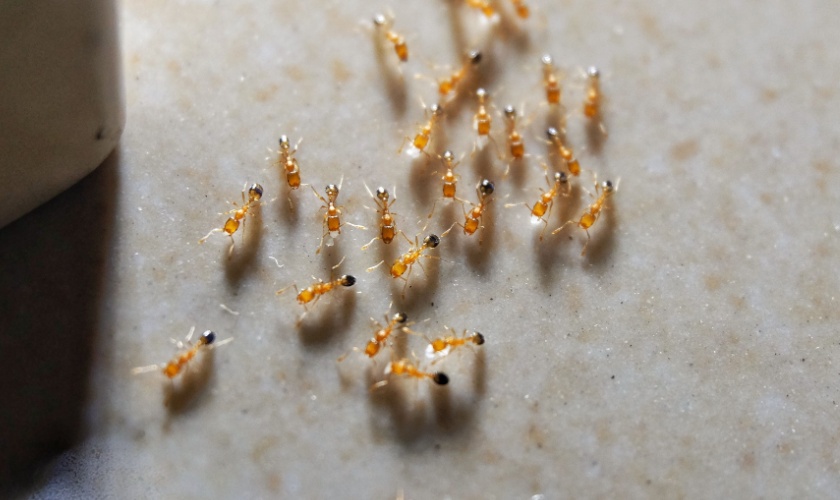
For many Kentucky homeowners, the first instinct when ants appear is to grab a can of spray from the store. It feels quick, simple, and reassuring—a few bursts across the trail, and the problem seems solved. But what looks like success is often just a temporary pause. Within days, the ants return, sometimes in greater numbers, leaving families frustrated and wondering why the sprays never seem to work.
The reality is that ant infestations are far more complex than what’s visible on the surface. Colonies operate like hidden cities, with queens producing endless workers and satellite nests expanding beyond reach. Add in Kentucky’s humid climate, the structural vulnerabilities of homes, and the variety of ant species in the region, and it becomes clear why DIY sprays almost always fail. To understand why these infestations persist, let’s look at the core reasons behind their resilience.
Surface Treatments Only Kill What You See
DIY sprays are designed for immediate knockdown. They eliminate the ants marching across your counter but leave the colony untouched. Since the queen continues producing workers, the infestation quickly resurfaces.
The challenge is that sprays only target the ants in plain sight. Once those workers are gone, the colony simply sends out replacements. This cycle creates the illusion of progress but never addresses the root of the problem. Homeowners often find themselves spraying the same areas repeatedly, only to see ants return within hours or days.
Another issue is that many sprays lose effectiveness once they dry. Residue may linger briefly, but it rarely deters ants for long. In fact, some sprays can scatter ants, causing them to split into multiple trails and invade new areas of the home. Instead of solving the problem, DIY treatments can unintentionally make infestations more widespread.
Colonies Are Hidden and Complex
Ant nests are rarely visible. They may be tucked behind walls, under floors, or outside in the soil. Sprays don’t reach these hidden areas, meaning the colony remains intact and ready to send out new foragers.
Colonies are highly organized, with chambers dedicated to food storage, nurseries for larvae, and protected zones for queens. A surface spray never penetrates these layers, leaving the majority of the colony untouched. Even if hundreds of ants are killed, the nest continues to thrive.
Some species build satellite colonies connected to the main nest. This means that even if one group of ants is disrupted, others remain active elsewhere on the property. Without targeting the entire network, DIY sprays only scratch the surface of a much larger infestation.
Multiple Entry Points Keep Ants Coming Back
Kentucky homes often have small cracks, gaps in foundations, or openings around windows and doors. Even if one trail is disrupted, ants simply find another way in. Without sealing these entry points, sprays become a temporary band-aid.
Ants are incredibly skilled at locating food and water sources. A single crumb or drop of moisture can attract them, and their ability to squeeze through tiny openings means they can exploit vulnerabilities homeowners don’t even notice. Sprays may kill the ants inside, but they do nothing to stop new ones from entering.
Moisture problems make matters worse. Leaky pipes, damp basements, and poorly sealed crawl spaces create ideal conditions for ants to thrive. Unless these structural issues are addressed, infestations will continue no matter how often sprays are used.
Resilient Colonies Replace Lost Workers
Ants are resourceful. When a trail is destroyed, the colony quickly redirects its workforce. The queen’s ability to produce thousands of new ants ensures that DIY sprays never keep up with the pace of reproduction.
Colonies function like factories, with workers constantly being replaced. Killing a few dozen ants with spray barely dents the population when hundreds more are waiting to emerge. This is why infestations often seem endless—the colony simply replenishes its workforce.
Some species even respond to stress by producing additional queens. This adaptation allows colonies to expand faster when threatened. In these cases, DIY sprays not only fail to solve the problem but can actually accelerate colony growth.
Kentucky’s Climate Favors Ant Activity
Warm summers and humid conditions create an ideal environment for ants. Colonies remain active for much of the year, making infestations harder to control with short‑term solutions.
Seasonal changes also drive ants indoors. Heavy rains can flood outdoor nests, forcing colonies to move into homes for shelter. Sprays may kill the first wave of intruders, but the colony simply relocates deeper inside, making the infestation harder to detect and treat.
Because Kentucky’s climate supports year‑round activity, infestations don’t follow a predictable pattern. Homeowners often find themselves battling ants in both summer and winter, making DIY sprays ineffective as a seasonal fix.
Different Species Require Different Strategies
Not all ants respond to the same treatment. Carpenter ants, pavement ants, and odorous house ants each require specialized approaches. Store‑bought sprays don’t account for these differences, which is why infestations often persist.
Carpenter ants, for example, nest in wood and can cause structural damage. A surface spray won’t reach their galleries inside beams or walls. Pavement ants, on the other hand, nest in soil and require targeted ground treatments. Odorous house ants are notorious for splitting into multiple colonies when stressed, making them especially difficult to control with DIY methods.
To illustrate how different species demand different solutions, here are some common examples Kentucky homeowners encounter:
- Carpenter ants: Nest inside wood, often damaging beams, decks, or siding. They require treatments that penetrate galleries rather than surface sprays.
- Pavement ants: Build nests in soil, driveways, and foundations. Effective control often involves ground‑level baiting and soil treatments.
- Odorous house ants: Known for splitting into multiple colonies when stressed. DIY sprays can worsen infestations by triggering colony budding.
- Pharaoh ants: Tiny ants that spread rapidly indoors. They require precise baiting strategies since sprays scatter them into new areas.
- Field ants: Typically nest outdoors but invade homes when colonies grow large. Control requires treating both the yard and the house perimeter.
Without proper identification, homeowners risk using the wrong product altogether. Misapplied sprays not only fail to solve the problem but can also make ants more resistant over time. Professional treatment ensures the right approach is used for the specific species invading your home.
Permanent Solutions for Kentucky Homes
Getting rid of ants permanently requires more than DIY sprays. It demands a strategy that combines inspection, exclusion, and professional treatment. By sealing entry points, applying safe but effective products, and monitoring activity over time, pest control experts ensure your home stays protected.
Families across Lexington and the surrounding counties turn to X‑iT Pest and Wildlife Solutions when they want more than a temporary fix. Our team goes beyond surface treatments, locating the colony, eliminating the queen, and reinforcing your home against future infestations. If ants keep returning after every spray, contact X‑iT Pest and Wildlife Solutions today—and let our proven approach deliver lasting relief and confidence that DIY methods simply can’t match.