
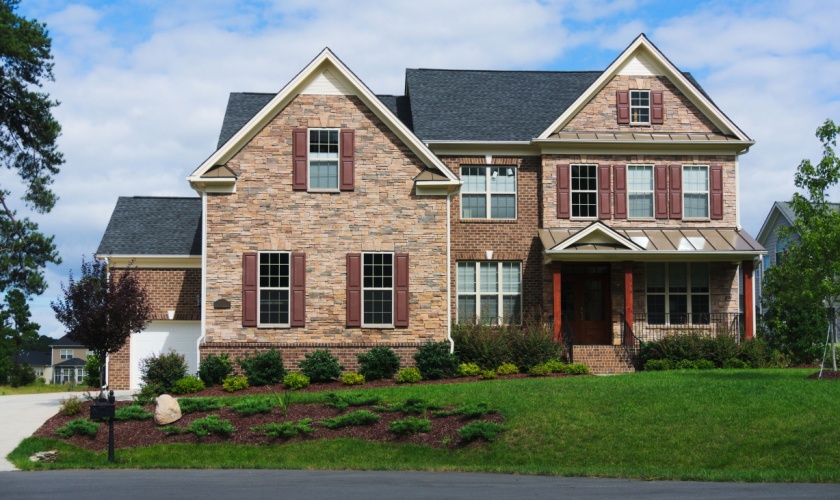
If you live in one of the Andover subdivisions in Lexington—whether it is Andover Forest, Andover Hills, or one of the surrounding communities—you have probably noticed that ants and spiders are persistent problems, particularly from early spring through late fall. These are not pests that just happen to show up randomly. The specific landscape, construction, and environmental characteristics of Andover neighborhoods create conditions that actively encourage ant colony growth and spider population expansion right at your doorstep.
What Makes Andover a Hotspot for Ants
Andover’s appeal—mature trees, established landscaping, and brick and stone homes set on generous lots—is also what makes it attractive to ant colonies.
The mature mulch beds and ornamental plantings that line foundations and walkways throughout Andover provide exactly what ant colonies need: moist soil, organic material, and shelter from the elements. Pavement ant colonies establish under the driveways, patios, and stone walkways that are standard features of Andover homes. Odorous house ants nest in mulch and soil within a few feet of the foundation, then send foragers inside through cracks, expansion joints, and gaps around doors and windows.
The larger, more established lots in Andover also support larger trees—and where there are large trees, there are often carpenter ants. Carpenter ant colonies frequently start in a dead limb, stump, or area of decay in a mature tree and expand into nearby structures as the colony grows. In Andover, where trees commonly overhang or border homes, this transition from tree to structure happens more easily than in neighborhoods with younger, smaller landscaping.
Moisture is the underlying factor. Kentucky’s humid springs and summers keep soil saturated around foundations, while irrigation systems maintain moisture even during dry periods. That consistent moisture at the soil surface is what supports the colony density that eventually drives foragers indoors.
Why Spider Activity Follows
Spiders go where the food is. The ant, cricket, beetle, and moth populations thriving in Andover’s landscaped yards and under its mature tree canopy provide an abundant food source for multiple spider species.
Wolf spiders are common across Andover properties. They are ground hunters, active at night, and frequently found in garages, basements, and along foundation walls. Their presence is directly proportional to the ground-level insect population.
Cellar spiders and house spiders are found in basements, garages, and undisturbed corners throughout the home. In Andover, where many homes have finished or unfinished basements, cellar spider populations can grow unchecked if the insect population is not addressed.
Brown recluse spiders are a reality in central Kentucky. They gravitate toward boxes, seldom-used closets, and storage areas—the kinds of undisturbed spaces that are common in Andover homes with larger footprints and ample storage.
Outdoor lighting is another contributing factor. Andover homes with porch lights, landscape lighting, and post lights attract flying insects at night, which in turn attract web-building spiders. Homeowners often find spider webs concentrated around exterior light fixtures, doorways, and garage entries.
Breaking the Cycle
Killing individual ants on the counter or knocking down spider webs provides temporary relief but does not address the populations living on the property. The most effective approach treats the exterior colony and insect habitat, creates a barrier around the home, and maintains that barrier through recurring service.
X-iT Pest & Wildlife Solutions provides year-round residential programs specifically designed for the conditions found in Lexington neighborhoods like Andover. Quarterly and bi-monthly plans cover ants, spiders, and the full range of common household pests, with interior and exterior treatment, cobweb removal, and complimentary retreats between visits.
If ants and spiders have become a recurring issue in your Andover home, schedule an inspection with X-iT Pest & Wildlife Solutions and get the problem addressed at its source.