
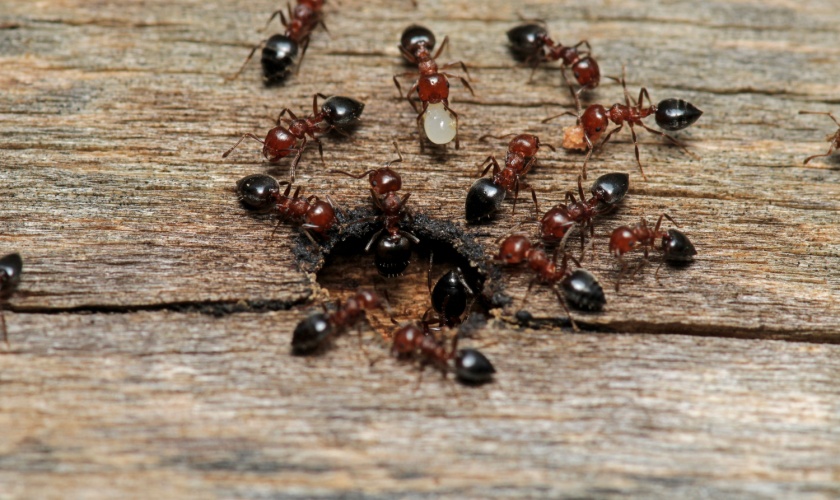
Ants are among the most persistent pests that Lexington homeowners encounter throughout the year. While many people think of ants as a summertime nuisance, different species remain active during various seasons, and understanding which types you’re dealing with is essential for effective control. Kentucky’s climate supports several ant species, each with unique behaviors, preferences, and potential threats to your home. Professional ant control services can accurately identify the species invading your property and implement targeted treatment strategies that eliminate colonies rather than just the ants you see.
Odorous House Ants
Odorous house ants earn their name from the distinctive rotten coconut or blue cheese smell they emit when crushed. These small, dark brown to black ants are one of the most common species invading Lexington homes.
Identification features:
- 1/16 to 1/8 inch long
- Dark brown to black coloring
- Uneven, bumpy thorax when viewed from the side
- Single node between thorax and abdomen
Behavior patterns:
These ants form massive colonies with multiple queens and can number in the hundreds of thousands. They prefer sweet foods but will consume almost anything, making your kitchen a prime target. Odorous house ants often nest in wall voids, under floors, and in crawl spaces, but they’ll also establish outdoor colonies in mulch, under stones, or in rotting wood.
You’ll typically see them trailing in lines to and from food sources. They’re particularly problematic because:
- Colonies frequently relocate when disturbed
- Multiple satellite colonies can exist in a single property
- They can enter through incredibly tiny cracks
- Traditional pesticides may cause colonies to split, worsening the problem
Carpenter Ants
Carpenter ants are the largest ants you’ll encounter in Lexington, and they pose a serious structural threat to homes. While they don’t eat wood like termites, they excavate galleries for nesting, potentially causing significant damage over time.
Identification features:
- 1/4 to 1/2 inch long (workers); up to 3/4 inch (queens)
- Black or dark red and black coloring
- Heart-shaped head when viewed from above
- Evenly rounded thorax
- Single node between thorax and abdomen
Behavior patterns:
Carpenter ants prefer moist, decaying wood for initial nesting but will expand into sound wood as colonies grow. In Lexington homes, they commonly nest in:
- Rotted window sills and door frames
- Water-damaged roof structures
- Wet wood around plumbing leaks
- Hollow porch columns and deck supports
- Tree stumps and firewood near homes
Warning signs include:
- Large black ants inside your home, especially in spring
- Piles of sawdust-like wood shavings near wooden structures
- Faint rustling sounds in walls or ceilings at night
- Winged ants emerging indoors during spring swarming season
Carpenter ant activity peaks in spring and early summer when they establish new colonies and forage for food to support growing populations.
Pavement Ants
Pavement ants are extremely common in Lexington, particularly in urban and suburban areas. You’ll often see them creating small dirt mounds in cracks in driveways, sidewalks, and building foundations.
Identification features:
- 1/8 inch long
- Light brown to black coloring
- Parallel grooves on head and thorax
- Two nodes between thorax and abdomen
- Small spines on the back
Behavior patterns:
These ants nest under pavement, concrete slabs, rocks, and building foundations. While they prefer nesting outdoors, they readily invade homes in search of food, particularly during spring and summer.
Pavement ants eat practically anything:
- Sweets and sugary foods
- Greasy or fatty foods
- Dead insects
- Seeds and pet food
You’ll notice pavement ants:
- Creating small dirt piles along foundation cracks
- Trailing along sidewalks toward food sources
- Invading kitchens through foundation cracks
- Fighting with neighboring colonies (ant wars on sidewalks)
Acrobat Ants
Acrobat ants get their name from their habit of raising their abdomen above their head when disturbed, resembling an acrobat. These ants are less common than others but still appear in Lexington homes.
Identification features:
- 1/8 inch long
- Light brown to black coloring
- Heart-shaped abdomen when viewed from above
- Two nodes between thorax and abdomen
- Abdomen that can curl up over thorax
Behavior patterns:
Acrobat ants typically nest in moist wood, often in areas previously damaged by carpenter ants or termites. They’re commonly found in:
- Rotted fence posts
- Dead tree branches
- Water-damaged building timbers
- Firewood stacks
- Foam insulation
These ants sometimes nest in electrical boxes and can cause shorts by chewing through insulation. They’re attracted to sweet foods but also consume other insects.
Argentine Ants
Argentine ants are an invasive species that has established populations in Kentucky in recent years. They’re particularly problematic because they form super-colonies with multiple queens.
Identification features:
- 1/16 to 1/4 inch long
- Light to dark brown coloring
- Musty odor when crushed
- Single node between thorax and abdomen
Behavior patterns:
Unlike most ant species that fight with other colonies, Argentine ants from different nests cooperate, creating massive super-colonies. This makes them:
- Extremely difficult to control
- Capable of overwhelming other ant species
- Persistent invaders of homes
- Quick to relocate when colonies are disturbed
They nest in shallow sites in soil, mulch, under debris, and in wall voids. Argentine ants form thick trails with thousands of workers and will aggressively defend food sources.
Little Black Ants
Little black ants are aptly named—they’re tiny and jet black. While small, they can form large colonies and become significant nuisances in Lexington homes.
Identification features:
- 1/16 inch long
- Shiny jet black coloring
- Two nodes between thorax and abdomen
- Extremely small size
Behavior patterns:
These ants nest in various locations:
- Soil under rocks and pavement
- Rotting wood
- Wall voids
- Behind baseboards
- In lawns and landscaping
They’re attracted to sweets but will consume grease, oil, vegetables, and dead insects. Their tiny size allows them to enter homes through the smallest cracks.
Fire Ants (Red Imported Fire Ants)
While less common in Lexington than in southern states, fire ants have been expanding their range northward and occasionally appear in Kentucky.
Identification features:
- 1/8 to 1/4 inch long
- Reddish-brown coloring
- Two nodes between thorax and abdomen
- Aggressive behavior
Behavior patterns:
Fire ants are dangerous because of their painful, venomous stings. They build large dirt mounds in lawns and can:
- Sting multiple times
- Swarm when mounds are disturbed
- Cause severe allergic reactions in some people
- Damage electrical equipment
Why Professional Identification Matters
Proper ant identification is crucial because:
- Different species require different treatments: What works for odorous house ants may fail against carpenter ants
- Bait preferences vary: Some ants prefer sweets; others want proteins or fats
- Nesting locations differ: Treating the wrong area wastes time and money
- Colony structures vary: Some have single queens; others have multiple queens requiring different approaches
Prevention Tips That Work
Regardless of species, you can make your Lexington home less attractive to ants:
- Eliminate food sources by cleaning spills immediately and storing food in sealed containers
- Remove water sources by fixing leaks and eliminating standing water
- Seal entry points around doors, windows, pipes, and foundation cracks
- Trim vegetation away from your home’s exterior
- Store firewood away from the foundation
- Clean up fallen fruit and pet food outdoors
When DIY Methods Fail
Store-bought ant control products often fail because they:
- Don’t address the colony itself, only visible workers
- Use repellent ingredients that cause colonies to split
- Target the wrong species with ineffective bait
- Can’t access hidden nesting sites
Professional ant control provides species-specific solutions that eliminate entire colonies, not just the ants you see.
Dealing with an ant invasion in your Lexington home? Accurate identification and targeted treatment make all the difference between temporary relief and permanent elimination. Contact X-iT Pest & Wildlife Solutions today for expert ant identification and customized treatment plans that eliminate colonies and prevent future infestations.