
Understanding Mole Behavior
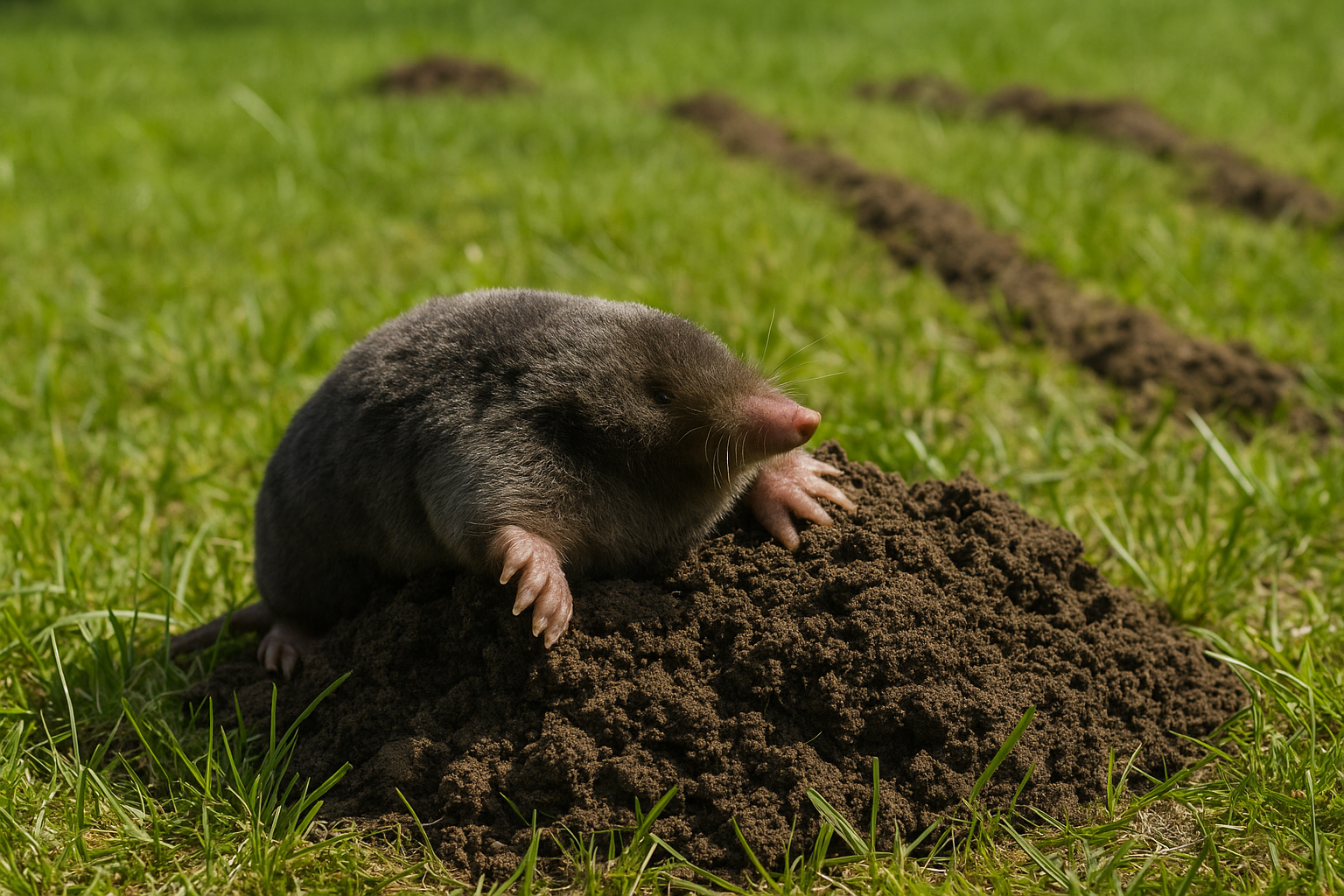
Moles are small burrowing mammals that spend most of their lives underground. These elusive creatures typically measure between 4 and 9 inches long and have gray or brown velvety fur, pink tails, and spade-like feet built for digging. Because of their poor eyesight and sensitivity to light, moles prefer the safety of soil tunnels and dense vegetation.
While moles may seem harmless, they can quickly turn into a major nuisance pest for homeowners, landscapers, and property managers across the U.S.
What Makes Moles a Pest?
Moles are carnivorous insectivores that feed primarily on earthworms, grubs, and soil insects. Although their diet helps reduce unwanted lawn pests, the downside is the extensive tunneling they create while hunting.
These tunnels can cause visible ridges, uneven lawns, and weakened soil structures. The result?
- Grass roots dry out, leading to brown, dead patches.
- Gardens and landscaping plants fail to grow properly.
- Irrigation systems and underground cables can be damaged by their burrowing.
Their constant digging activity is what makes moles a destructive lawn pest, especially in residential areas, golf courses, and farms.
Common Signs of a Mole Infestation
Spotting a mole problem early is key to preventing serious lawn damage. Watch for these common warning signs:
- Raised ridges or mounds of soil across your lawn.
- Soft or spongy patches when walking over the grass.
- Disrupted plant roots or newly planted flowers dying.
- Multiple molehills appearing overnight.
If you notice several of these indicators, you’re likely dealing with an active mole infestation that needs immediate attention.
Damages Caused by Pest Moles
Although moles do not eat plants, their tunneling creates indirect damage to landscaping and crops. The burrows interfere with root systems, leading to poor plant growth and soil erosion. Additionally, mole tunnels provide entryways for other pests such as voles, mice, and insects.
In severe cases, moles can ruin entire sections of turf—costing homeowners hundreds of dollars in lawn repair and re-sodding.
That’s why many property owners choose professional mole control services to eliminate the issue safely and efficiently.
Effective Mole Control and Removal Methods
1. Mole Trapping
Trapping remains the most effective and humane method of mole removal. Professional wildlife control experts strategically place traps in active tunnels to capture and remove the animals without harming other wildlife.
2. Repellents and Baiting
Some homeowners try castor oil-based repellents or mole baits, though results may vary. Repellents work best as a preventive measure once the main population has been reduced.
3. Professional Mole Control Services
Moles are highly territorial and can dig over 100 feet of tunnels per day. Because of this, DIY methods often fail to stop the damage completely. Hiring trained pest management professionals ensures a faster, safer, and more permanent solution.
Professionals use specialized equipment, experience, and knowledge of mole behavior to quickly identify tunnels and eliminate infestations at the source.
Preventing Future Mole Problems
Once your lawn is mole-free, follow these preventive steps to keep them from coming back:
- Reduce grub populations (their main food source).
- Keep your lawn well-drained and aerated.
- Use natural repellents or barriers along property edges.
- Schedule routine pest inspections to detect early activity.
A proactive prevention plan not only protects your landscape but also saves you time and costly repairs.
Call the Experts for Mole Control Near You
If you’ve noticed fresh mounds or tunnels in your yard, it’s time to take action. Professional mole removal specialists have the right tools, traps, and techniques to restore your lawn quickly and effectively.
Don’t let moles destroy your hard work—contact your local pest and wildlife control service today for fast and reliable mole control solutions.