
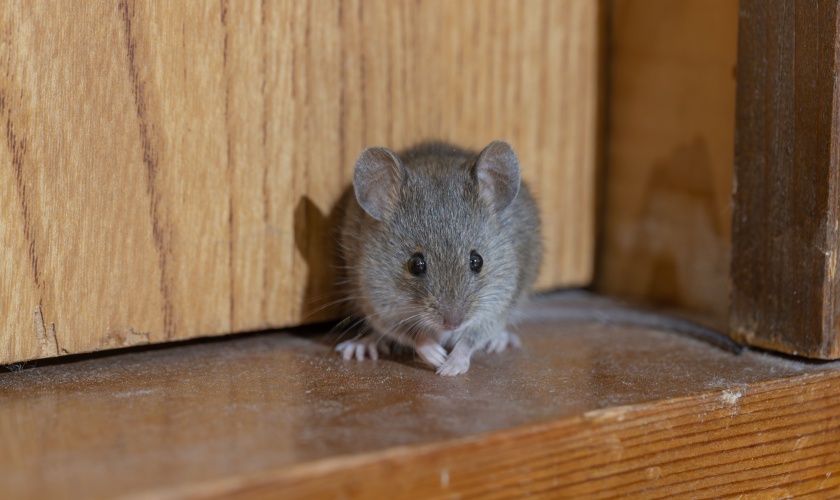
Lexington’s historic neighborhoods contain some of the most distinctive residential architecture in Kentucky. Ashland Park, Chevy Chase, Kenwick, and the streets surrounding downtown are lined with craftsman bungalows, Victorian-era two-stories, brick foursquares, and colonial revivals built in the late 1800s and early 1900s. These homes have stood for well over a century, and they are more vulnerable to old home pest problems than newer properties.
That vulnerability is a predictable consequence of age, construction methods, and the cumulative effects of decades of seasonal change, repair work, and material deterioration. Homeowners in Lexington’s historic neighborhoods who understand why older homes attract more pests are better positioned to address problems before they become serious. X-iT Pest & Wildlife Solutions provides pest control for historic homes in Lexington, including the historic neighborhoods where these challenges are most concentrated.
Why Older Homes Are More Vulnerable
A home built in 1910 was constructed with materials and methods that made sense at the time but were never designed to provide the kind of sealed, pest-resistant envelope that modern building standards produce. Over a century of settling, weathering, and repair work, gaps and vulnerabilities develop that simply do not exist in the same way in newer construction.
Wood framing in older homes has dried and contracted over decades, creating separations at joints that were once tight. Foundation walls have settled and shifted, opening cracks at the base of the structure. Original window frames and door frames—often made from old-growth wood that is dense and durable but now weathered—develop gaps around their perimeters that provide direct access to the interior. Plaster walls, which are standard in homes of this era, develop cracks over time that connect interior spaces to wall voids.
Many of these changes develop gradually and are not visible without a close inspection. Collectively they create a structure with far more entry points than a home built to modern standards.
Foundation Issues
The foundations of Lexington’s historic homes vary considerably. Older homes in Chevy Chase and Ashland Park were frequently built on stone rubble foundations or early poured concrete, both of which develop cracks and gaps over time that newer poured concrete or block foundations are less prone to in their early decades.
Stone rubble foundations are essentially impossible to fully seal. The mortar between stones deteriorates over time, and the irregular surface creates gaps that mice, insects, and spiders can exploit freely. A Norway rat can squeeze through a half-inch opening, and a house mouse requires only a quarter inch—gaps that are common and often invisible in a century-old foundation.
Settling foundations also affect the sill plate—the horizontal wood member that sits on top of the foundation wall and supports the floor framing above. When a foundation settles unevenly, the sill plate separates slightly from the masonry below it, creating a gap that runs along the base of the structure. This gap is a primary entry point for mice, ants, and a range of other pests in older Lexington homes.
Crawl Spaces
Many of Lexington’s historic homes were built on crawl space foundations, particularly on the sloped lots common in Chevy Chase and the hillside streets of Kenwick. These crawl spaces were never designed to be moisture-controlled environments. In the era they were built, ventilation was considered adequate management.
A century later, many of these crawl spaces have exposed soil floors, deteriorating wood piers, and ventilation systems that are either blocked or inadequate for current conditions. The result is a persistently humid environment beneath the living space that creates ideal conditions for subterranean termites, carpenter ants, wood-decaying fungi, and moisture-seeking insects.
Subterranean termites require consistent moisture to survive and reproduce. A damp, soil-floored crawl space with wood framing close to the ground provides exactly the environment they need. In Lexington’s historic neighborhoods, where crawl spaces have had decades to accumulate moisture damage and where soil-to-wood contact points are common, termite risk is meaningfully higher than in newer construction with modern crawl space management.
Aging Utility Penetrations
Every pipe, wire, and conduit that enters a historic home represents a potential pest entry point. In homes that have been updated over the decades—which describes most of Lexington’s older housing stock—utility penetrations have been added, modified, and sometimes abandoned multiple times. Each modification is an opportunity for a gap to be left unsealed.
Original plumbing in homes of this era frequently ran through floors and walls without the tight-fitting escutcheon plates and foam sealants used in modern construction. Where pipes have been replaced or rerouted, gaps around the new penetrations are common. HVAC systems added to homes that were originally heated by radiators introduce ductwork penetrations through floors and walls that may never have been properly sealed.
These gaps are particularly significant because they often connect interior living spaces directly to wall voids and crawl spaces—the same spaces where rodents nest and insects travel. A gap around a pipe penetration in a kitchen cabinet base provides a direct route from the crawl space below to the food storage area above.
Rodent Concerns in Historic Homes
Rodents are the most consistent and consequential pest problem in Lexington’s older housing stock. The combination of deteriorating foundations, aging utility penetrations, and construction gaps that have developed over decades gives mice and rats more entry opportunities than they would find in newer construction.
House mice are the primary concern. They are small enough to exploit gaps that homeowners would not think to seal, and they are persistent—a mouse excluded from one entry point will often find another. In older homes where gaps are numerous, complete exclusion is more challenging than in newer construction and typically requires a systematic professional inspection rather than a homeowner attempting to identify and seal entry points independently.
Norway rats are more common in the older, denser neighborhoods near downtown Lexington, where proximity to commercial areas, aging sewer infrastructure, and the density of older construction all contribute to higher rat populations. Rats are capable of gnawing through deteriorating mortar and softened wood to create or enlarge entry points, which means a home that has had a rat problem in the past may have entry damage that exceeds what was originally present.
Termite Risks
Lexington’s historic homes carry a higher-than-average termite risk for several reasons that compound each other. The age of the wood framing means decades of potential exposure. The prevalence of crawl space construction and the moisture conditions common in older, unencapsulated crawl spaces create favorable termite habitat. The settlement and deterioration of foundation elements over time also creates more soil-to-wood contact points than newer construction typically has.
Eastern subterranean termites are the species to be concerned about in this region. They travel through the soil and access wood through mud tubes—narrow tunnels constructed from soil and debris along foundation walls, piers, and any surface connecting soil to wood. In a crawl space with wood piers set directly on soil, or with floor joists close to the ground, termites can access structural framing without ever being visible from outside the home.
Termite damage in historic homes can be particularly difficult to assess because the structural framing has often been repaired, reinforced, and modified multiple times. Previous damage may have been patched without fully addressing the infestation, leaving compromised framing that is not immediately obvious during a visual inspection.
Inspection Recommendations for Historic Home Owners
Given the range of pest vulnerabilities that come with owning a home of this age, a professional pest inspection is worth treating as routine maintenance rather than a response to an active problem. A thorough inspection of a historic home should include:
- Crawl space assessment for moisture conditions, wood deterioration, termite mud tubes, and evidence of rodent activity
- Foundation perimeter examination for cracks, mortar deterioration, and gaps at the sill plate
- Utility penetration review in kitchens, bathrooms, and mechanical spaces
- Attic inspection for rodent evidence, carpenter ant activity, and entry points at the roofline
- Exterior examination of window frames, door frames, and any points where wood meets masonry
X-iT Pest & Wildlife Solutions works with homeowners throughout Lexington’s historic neighborhoods to identify the specific vulnerabilities present in their homes and develop treatment and exclusion plans that address them directly. Owners of older homes in Lexington who have not had a professional pest inspection recently should schedule one before the next pest season is underway.