
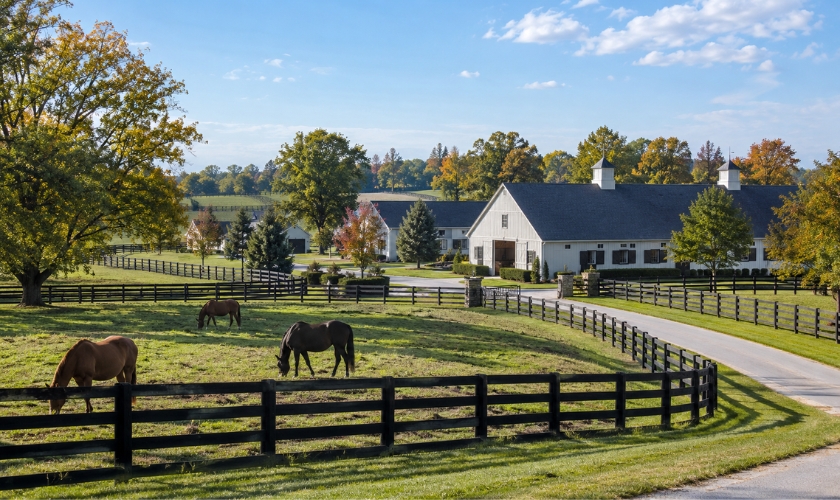
Horse farms around Lexington sit in a working landscape of barns, run-in sheds, tack rooms, and feed storage. That layout is built for horses. It is also convenient for rodents, flies, and other pests that follow grain, manure, and shelter. Pest work on a farm is not the same as spraying the perimeter of a suburban house. It has to respect animal safety, feed handling, and the way outbuildings actually get used. X-iT Pest & Wildlife Solutions works with residential, commercial, and farm properties in Central Kentucky.
The Bluegrass region’s horse operations range from small private barns on the edge of Fayette County to larger farms in surrounding counties the company already serves, including Woodford, Jessamine, Scott, and Bourbon. The pest pattern is similar even when the farm size is not: stored feed draws rodents, moisture and manure support flies, and older barns offer gaps that neither horses nor people notice until something is nesting in the loft.
Why Barns and Outbuildings Attract Pests
A barn concentrates food, water, and cover in one place. Grain, pellets, hay, and treats are calories. Water buckets and wash stalls stay damp. Aisles, stall walls, and loft floors create quiet cavities. Doors stand open during chores. That combination is efficient for farm work and equally efficient for letting mice, rats, and flies get in.
Outbuildings add more of the same on a smaller scale. A feed room, trailer shed, or equipment bay may be visited only a few times a day. Rodents prefer that kind of quiet. If the building also holds open bags, a leaky roof, or a gap at the slab, it can support a population that later moves into the main barn or a nearby house.
Wildlife uses farm structures too. Raccoons, opossums, and skunks investigate feed rooms and trash. Birds nest in rafters and loft edges. Those problems overlap with pest control, but they are not solved by the same tools. Exclusion, sanitation, and species identification still come first.
Rodents Around Feed and Bedding
House mice and rats follow grain. They chew bags, contaminate bins with droppings and urine, and nest in stacked hay, unused tack, or the wall void of a wooden feed room. A mouse needs only a small gap at a door sweep, pipe, or foundation. A rat can use a slightly larger opening at a slab edge or along a utility line.
The damage is not only wasted feed. Contaminated grain is a sanitation issue. Gnawed wiring in a pump house or loft is a fire concern. Burrows along a foundation can undermine a dirt-floor shed. Droppings on ledges above stalls are unpleasant and hard to clean once they accumulate.
Feed storage habits that cut rodent pressure
- Keep bagged feed in sealed metal or heavy plastic containers, not open sacks on the floor
- Store only what you will use in a reasonable time and rotate older bags forward
- Sweep spilled grain daily instead of leaving it under pallets or along the wall
- Keep the floor of the feed room clear enough to see droppings and gnaw marks
- Raise bins off the floor when you can so you can inspect underneath
- Close feed-room doors when chores are finished
Hay storage is harder to seal than a bin. The practical goal is to keep the stack orderly, dry, and off direct soil contact when possible, and to watch the edges for nesting. Do not assume a quiet loft is empty. Look for shredded wrapping, droppings on stringers, and runways along the top of the wall.
Rodent control on a horse farm has to account for non-target animals. Bait that is appropriate in a locked bait station on a house foundation may not belong where a horse, dog, or barn cat can reach it. Trapping, station placement, and exclusion should be planned around the way people and horses actually move through the building. That is a reason to have the layout inspected rather than setting products from a hardware aisle in an open aisleway.
Flies and the Manure-Moisture Cycle
Flies around a barn are not a mystery. House flies and related species develop in wet organic material: manure that stays damp, soiled bedding, spilled feed mixed with water, and wet spots at wash racks or leaking hydrants. Stable flies bite horses and people. Face flies and house flies add irritation and sanitation problems around stalls and entry doors.
You cannot treat your way out of a wet manure pile. The pile, the stall, and the drainage around them have to change if the fly numbers are going to stay down. Regular removal of manure and wet bedding, keeping piles as dry and as far from the barn doors as the property allows, and fixing leaks do more than a single spray along a wall.
Water troughs, automatic waterers, and shaded puddles near the barn also support mosquitoes and midges in warm months. Those insects are a different problem from manure flies, but they share the same need for standing water. Dumping unused tubs and keeping drainage moving around the wash area reduces that extra source.
Pest-Management Considerations Around Horses
Horses bring limits that a vacant warehouse does not. Products used near stalls, feed, and water have to be chosen and placed with that in mind. Aerosols, broadcast granules, and uncovered bait have no place in a plan that ignores label directions or the animals in the next stall. Kid-and-pet-conscious treatment language on a residential plan is not automatically the same as a barn plan. The building, the species present, and the way feed is stored all have to be part of the decision.
Many barns stay open by design. That is good for horses and bad for any plan that assumes a closed room. Exclusion still helps at feed rooms, tack rooms, and enclosed offices. It will not turn a center-aisle barn into a sealed box, and it should not. The work is to harden the rooms that hold feed and records and to reduce harborage in the larger structure.
Schedule work around horses when you can. A calm barn is safer for people and animals than a treatment visit during peak turnout chaos. Point out stall-by-stall concerns: a gap behind a water line, a nest in an unused stall, and a door that no longer meets the threshold. Those details are more useful than a general “spray the barn” request.
A Walk-Through That Actually Helps
- Start at the feed room. Check bags, bins, door sweeps, and the wall-to-slab joint.
- Walk the aisle and stall fronts for droppings, chew marks, and wet spots that never dry.
- Look up. Loft edges, ridge vents, and the tops of partition walls hide nests and bird roosts.
- Step outside and follow the foundation, downspouts, and any pipe that enters the building.
- Open the outbuildings you use least. Quiet sheds are where populations often start.
- Note manure storage, wash-rack drainage, and any standing water within a short walk of the barn doors.
Write down what you find instead of relying on memory after chores. Patterns show up across buildings: the same unsealed pipe sleeve, the same sagging screen, and the same spilled feed under a pallet.
What Professional Service Can Cover on a Farm
An inspection should separate rodent activity, fly sources, occasional wildlife, and general insects so the response is not one product for every complaint. Exclusion on feed rooms and enclosed spaces, targeted rodent work in stations that horses cannot reach, and a fly plan that starts with sanitation are different jobs that sometimes belong on the same property.
X-iT also handles wildlife issues that show up on farms, including animals using lofts, sheds, and similar structures.
If rodents, flies, or other pests are getting into barns, feed storage, or outbuildings on a Lexington-area horse farm, X-iT Pest & Wildlife Solutions can inspect those structures and outline work that fits how the farm actually runs. Contact us to request an inspection and start with the buildings that hold feed and horses rather than a generic perimeter treatment.