
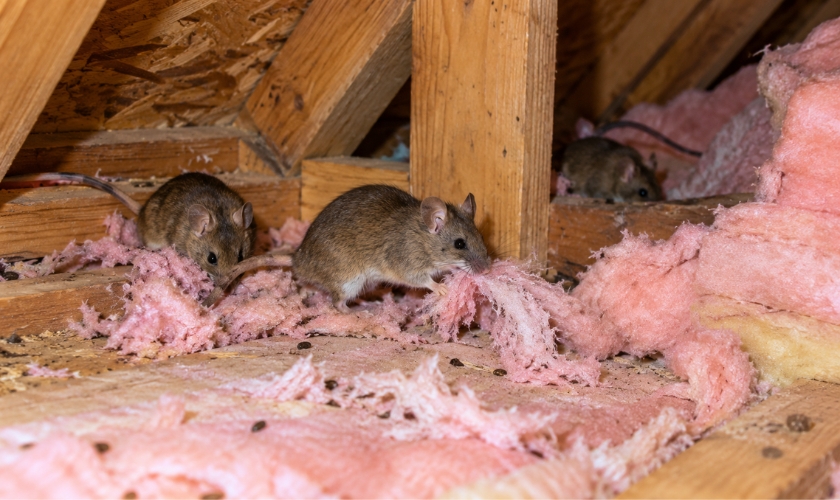
Mice can damage attic insulation by tunneling through it, gathering material for nests, and leaving urine and droppings behind. At X-iT Pest & Wildlife Solutions, our rodent control services help Lexington homeowners address the animals, their access points, and the damage an infestation can leave. If you have heard movement overhead or found trails through the insulation, the first step is understanding how much of the attic is affected. Replacing insulation before addressing the mice can leave fresh material exposed to the same problem.
How Mice Change the Condition of Insulation
An attic gives mice a protected space with nesting material close at hand. Fiberglass batts, loose fill, cardboard, and stored fabrics may all become part of a nesting area. Mice can pull apart material or establish repeated travel routes between shelter and other parts of the house. The resulting damage may look like shallow channels, disturbed patches, or pockets of debris beside framing.
Those changes can affect how evenly insulation covers the attic floor. Insulation performs according to its material, thickness, and installation. Gaps, displaced material, and compression can reduce the protection provided in affected areas. A few visible tunnels do not tell you how much energy your home is losing, and an unusually high utility bill cannot confirm mice. An inspection can connect the physical condition of the insulation with other evidence of rodent activity.
Contamination presents a separate concern. Droppings may collect along paths, while nesting areas can contain urine, food scraps, and chewed material. A stain alone does not establish the extent of the problem. The type of insulation, its accessibility, and the distribution of contaminated material all influence what cleanup or replacement will involve.
Signs You Can Check Without Disturbing the Attic
You may first notice scratching after the house becomes quiet, especially during the evening or overnight. Small droppings near the attic hatch, gnawed storage boxes, or disturbed insulation can provide additional clues. Mice may also leave evidence in a garage or pantry even when their nesting area is overhead. Activity in several locations can help explain how they are using the building.
Avoid walking through loose insulation to investigate a sound. Attic flooring may be limited, and insulation can hide openings between ceiling joists. You can fall through the ceiling if you step onto an unsupported surface. Looking from a safe access point and recording what you see is more useful than moving insulation around without a plan.
Photos of accessible damage can help during an inspection. Include the location, approximate size of the disturbed area, and any nearby openings or storage. Keep children and pets away from droppings or nesting material. Dry sweeping or vacuuming rodent waste can send contaminated particles into the air, so leave that material undisturbed until the appropriate cleanup approach is established.
Why the Entry Route Needs Attention
Mice can reach an attic through openings around the roofline, damaged soffits, or gaps elsewhere in the structure. They can also travel upward inside wall cavities after entering at a lower level. The opening nearest the damaged insulation may be part of their travel route rather than the original exterior entrance.
A useful inspection looks beyond the nest. We consider evidence in the attic alongside accessible exterior openings and other areas with activity. That helps identify where control measures belong and which repairs can reduce future access. Materials used for exclusion must suit the opening and resist gnawing; loosely filling a gap with ordinary foam may leave a vulnerable repair.
Timing also needs care. Closing an active route without accounting for animals inside can redirect them into other parts of the home. Control and exclusion should work together. Attic vents must continue to function, and repairs around roof components should preserve their intended drainage and ventilation.
Deciding What to Clean or Replace
The condition of the attic guides the restoration discussion. Some infestations involve a limited area, while others leave contamination across multiple sections. Disturbed but otherwise usable material and heavily contaminated material may require different decisions. A professional assessment should explain what was found and why a particular cleanup or replacement scope is recommended.
At X-iT, attic restoration and rodent damage repair are among the services described in our rodent control work. The specific project still depends on your home. Ask which materials will be removed, how inaccessible areas will be handled, and whether replacement insulation is included in the proposal. You should understand the work before the damaged area is covered again.
Replacement insulation must be installed with the attic’s airflow and building details in mind. Eave ventilation, bathroom exhaust ducts, wiring, and heat-producing fixtures may affect the work. If rodent activity has damaged electrical components, an electrician should assess those components separately. Fresh insulation cannot correct an unsafe wire or a disconnected exhaust duct.
If you suspect mice have damaged your Lexington attic, contact X-iT Pest & Wildlife Solutions to discuss an inspection. We can help you understand the activity, the likely entry routes, and the available control and restoration options so you can make a clear decision about the next steps for your home.