
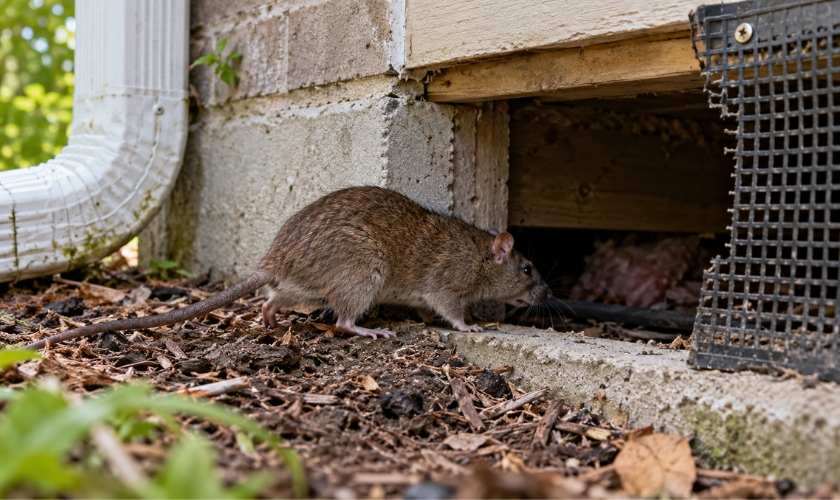
A crawl space can give rats a sheltered route beneath a Lexington home and access to openings that lead into the building. At X-iT Pest & Wildlife Solutions, we use rodent inspections and control to investigate that route, including evidence around the foundation and accessible spaces under the house. Rats do not need an open crawl space door to create trouble. A damaged vent, loose access panel, or gap around a utility line may give them a starting point, especially when food and cover are nearby.
Why the Space Beneath Your Home Attracts Rats
Crawl spaces provide protection from wind and weather. They may also offer nesting material, concealed travel paths, and relatively little disturbance. Insulation hanging below the floor, debris left from repairs, and stored items can create additional hiding places. A rat can use that shelter while traveling outside to find food rather than feeding entirely inside your home.
Conditions around the foundation influence the appeal of the space. Pet food left outdoors, poorly secured trash, birdseed on the ground, and dense vegetation can support activity close to the house. A dripping pipe or drainage problem may add moisture. These conditions do not prove an infestation, but they are useful places to examine when you find signs of rats underneath the building.
Norway rats commonly travel and nest at ground level. They can dig burrows near foundations, sheltered edges, and other protected locations. A burrow beside the house may connect to a crawl space opening or simply indicate nearby activity. Other rats can climb, and Norway rats can climb as well, so inspection should not stop with holes in the soil.
How Rats Move From the Crawl Space Into Rooms
The crawl space sits close to plumbing, wiring, ducts, and the underside of the floor. Openings around those components can lead into walls or interior spaces. A rat may follow a pipe penetration toward a kitchen or laundry room, then use another gap to reach an accessible food source. Travel inside structural cavities can make the animal difficult to see even when it is active regularly.
Older repairs sometimes leave openings where a line was moved or a duct was replaced. A loose register connection, damaged subfloor area, or unsealed chase can also provide a route. Rats can enlarge vulnerable materials by gnawing. Identifying these details requires more than checking whether the exterior access door is shut.
Sound can help locate the area needing attention, but it cannot map the entire route. Scratching beneath a room may come from an animal in the crawl space, wall, or floor cavity. The same sound can travel through framing and seem to come from another location. Droppings, tracks, gnawing, and the condition of nearby openings give an inspection more reliable context.
Evidence Around the Foundation
Start with an exterior look from a safe, accessible position. A displaced vent cover, fresh-looking soil near a sheltered hole, or repeated disturbance around an access panel is worth documenting. You might also see gnawed edges or droppings near a protected travel path. Keep notes about where evidence appears instead of assuming every opening belongs to the same animal.
A hole alone does not identify a rat. Other animals dig, and erosion can leave voids around a foundation. Avoid probing a burrow, flooding it, or filling it immediately. Those actions can obscure evidence or leave an active animal using another route. A pest inspection can assess the signs together and determine whether rodent control is appropriate.
Homeowners should also be cautious about entering a crawl space themselves. Low clearance, exposed wiring, sharp debris, wet conditions, and animal waste can make access unsafe. You do not need to crawl toward the noise to prepare for a service visit. Clear the access area from outside and tell us about any known plumbing leaks or previous foundation work.
Building a Control and Repair Plan
We look for active rodent signs and the conditions that support them, then discuss suitable control measures and exclusion work. Trapping or other control methods should fit the activity and the building. Placement needs to account for children, pets, and access for monitoring. Simply setting a device at the crawl space entrance may miss the route rats actually use.
Exclusion is part of reducing future access, but repairs need to respect the function of the crawl space. Ventilation openings should retain appropriate airflow, and drainage features should remain effective. Materials around pipes and wires must suit those components. Loose foam or an improvised board may conceal an opening without creating a durable barrier.
Cleanup and damage assessment follow their own scope. Rats may disturb insulation, contaminate material, or chew building components. Our rodent services include damage repair and cleanup options, while electrical, plumbing, or structural concerns may call for the appropriate contractor. Ask what the proposed work includes and which issues require another specialist.
If you have found burrows, droppings, or noises below your Lexington home, reach out to X-iT Pest & Wildlife Solutions. We can inspect the accessible evidence and help you connect control, foundation repairs, and practical prevention steps to the way rats may be using your crawl space.