
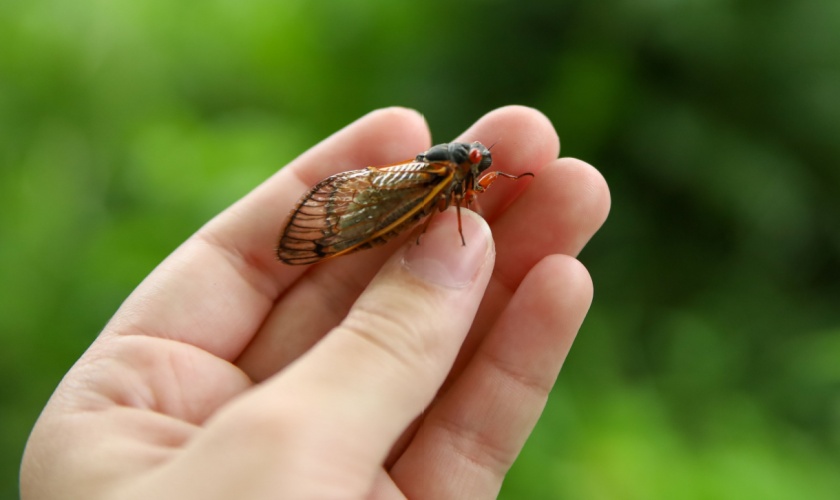
Cicadas are one of the defining sounds of a Central Kentucky summer, and their loud daytime chorus is a familiar part of the season. Every year, annual cicadas emerge in Lexington from midsummer into early fall, and in certain years far larger numbers appear. Beyond the noise, many homeowners wonder whether all those cicadas are drawing other pests toward their homes. The answer is that cicadas can contribute to several pest problems, though usually in indirect ways.
Cicadas Themselves Are Not Home-Invading Pests
It helps to start with what cicadas do not do. Cicadas do not bite, sting, or infest homes, and they do not feed on household food or damage the structure of a house. Adult cicadas spend their short lives in trees, where they mate and lay eggs before dying. On their own, they are a nuisance by volume and sound rather than a direct threat to a home. The pest concerns associated with cicadas come from what they attract and what happens after they die. In other words, the cicadas are less the problem than the chain of activity they set in motion around a property.
Cicada Killer Wasps Follow the Cicadas
One of the clearest connections is the cicada killer wasp. These large wasps time their activity to the cicada season, because they hunt cicadas to provision their underground nests. Cicada killers are alarming to encounter due to their size, and they tend to dig burrows in bare, sunny patches of lawn, garden beds, and areas near sidewalks and foundations. While the males are territorial and the females rarely sting people, a yard with heavy cicada activity can attract these wasps in noticeable numbers. Homeowners concerned about them may benefit from stinging insect control.
Dead Cicadas Attract Scavengers
After cicadas die, their carcasses accumulate on the ground, and this is where secondary pest problems often begin. Decaying cicadas are a food source for ants, and large numbers of them can draw ant activity toward a home’s perimeter and into the yard. Other scavenging insects and even rodents may feed on the remains as well. Clearing fallen cicadas from around the foundation, walkways, and patios reduces this attraction and limits the pests that come looking for an easy meal. During a heavy emergence, the volume of carcasses can be significant, so regular cleanup makes a real difference.
Cicadas as a Food Source for Wildlife
Cicadas are eaten by a wide range of animals, including birds, raccoons, opossums, and other wildlife. A summer with heavy cicada numbers provides an abundant food supply that can draw these animals closer to homes and yards. While this is generally a temporary effect, it can bring wildlife into contact with properties in ways that occasionally lead to nuisance problems, particularly when animals begin exploring for other food sources nearby.
Tree Damage From Egg-Laying
In years with large cicada emergences, female cicadas lay eggs in the small branches of trees and shrubs, which can cause a type of damage known as flagging, where the tips of branches wilt and turn brown. Established trees usually recover, but young and newly planted trees can be more affected. While this is a landscaping concern rather than a household pest issue, it is another reason heavy cicada years draw extra attention.
What Homeowners Can Do
Managing the pest problems connected to cicadas comes down to a few practical steps:
- Rake and remove dead cicadas from around the foundation, patios, and walkways.
- Keep an eye on bare patches of lawn where cicada killer wasps may dig burrows.
- Address any ant activity early before it becomes established near the home.
- Protect young trees during heavy emergence years if egg-laying damage is a concern.
These steps reduce the secondary problems that follow a busy cicada season.
How Professional Pest Control Helps
Because the pests linked to cicadas range from wasps to ants to occasional wildlife, a comprehensive approach works best. X-iT Pest & Wildlife Solutions handles both insect and wildlife concerns, which means a single company can address cicada killer wasps, ant activity around the perimeter, and nuisance wildlife drawn to the yard. Year-round pest coverage keeps the perimeter protected so that the surge of activity during cicada season does not turn into a lasting problem.
Lexington homeowners noticing more pest activity during cicada season can contact X-iT Pest & Wildlife Solutions for a free inspection. A local technician can evaluate the property and recommend a plan to keep the secondary pests that follow cicadas under control.