
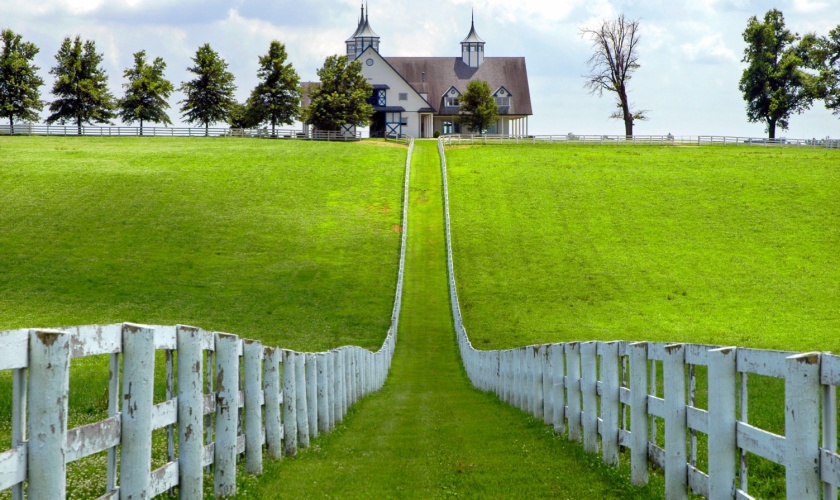
Fayette County is horse country. The farms that define the landscape around Lexington—across Woodford County, Bourbon County, and the rural corridors connecting them—are working agricultural properties with unique pest management needs that residential pest control alone does not address. Barns, feed storage facilities, run-in sheds, and the open acreage surrounding them create pest conditions that are more complex and, in some cases, more serious than those found on typical residential properties.
Horse farm owners and rural property managers in Central Kentucky deal with a specific set of pest challenges that are directly tied to the animals, the feed, the structures, and the land. Understanding those challenges is the starting point for managing horse farm pest control effectively. X-iT Pest & Wildlife Solutions provides pest control services for properties throughout Lexington and the surrounding counties, including farms and rural properties with specialized pest management needs.
Fly Pressure on Horse Properties
Flies are the most persistent and economically significant pest concern on horse farms in Central Kentucky. Multiple fly species are present, and each has different breeding habits, behavior, and impact on horses and farm workers.
House flies and stable flies breed in manure, soiled bedding, and decomposing organic material. On a working horse farm, these breeding substrates are continuously available. Stable flies are biting flies that feed on the legs and lower body of horses, causing irritation that leads to stamping, reduced feed intake, and stress-related weight loss. Heavy stable fly populations have documented effects on horse performance and health.
Horn flies and face flies are more associated with cattle but are present on mixed properties and in areas adjacent to cattle operations, which is common in the Fayette, Woodford, and Bourbon County farming corridors.
Bot flies are a specific concern for horse owners. The horse bot fly (Gasterophilus species) lays eggs on the legs and body hair of horses in late summer and fall. Horses ingest the eggs during grooming, and the larvae develop internally before passing out in manure to pupate in soil. Bot fly management requires attention both to the horses themselves and to the environment around them.
Effective fly management on a horse property requires an integrated approach—reducing breeding substrates through manure management, applying targeted treatments to breeding areas, and using residual products in barn environments where flies rest and breed.
Rodents Around Feed Storage
Feed storage is the primary driver of rodent activity on horse farms. Grain, pelleted feed, hay, and supplements provide an abundant, year-round food source that attracts and sustains large mouse and rat populations. A single bag of improperly stored grain can support a significant rodent population over a winter season.
Norway rats are the most common rodent pest in barn and feed storage environments. They burrow under concrete slabs, inside wall voids, and beneath stored hay. They contaminate feed with urine and droppings, cause structural damage through gnawing, and can transmit disease. On a property where large quantities of feed are stored, rodent populations can reach levels that would not be possible in a typical residential setting.
House mice are present alongside rats in most barn environments and are often more difficult to control because of their small size and ability to access spaces that exclude larger rodents. Mice contaminate far more feed than they consume—a mouse contaminates approximately ten times its body weight in food through urine marking during foraging.
Rodent control on a farm requires a systematic approach that combines exclusion, trapping, and bait station placement calibrated to the specific layout of the property. Bait station placement near horses and other animals requires careful consideration of product selection and placement to avoid non-target exposure.
Wasps and Stinging Insects
Wasps and stinging insects are a consistent hazard on horse properties. Open structures, stored equipment, and the abundance of insects that serve as prey for wasps all contribute to higher stinging insect activity on farms than on typical residential properties.
Paper wasps commonly nest inside barn rafters, under metal roofing overhangs, in equipment storage areas, and inside unused machinery. A horse startled by a wasp nest during handling or riding is a genuine safety risk. Wasps disturbed during routine barn work—moving hay bales, opening storage areas, working in loft spaces—are a hazard for farm workers as well.
Yellow jackets nest in the ground and in wall voids, and their ground nests are particularly hazardous on farm properties where mowing, tilling, and moving equipment over open ground is routine. Striking a ground nest with a mower or tractor can trigger an aggressive defensive response that puts both operators and animals at risk.
Bald-faced hornets build large paper nests in trees and on structures, and their colonies reach peak size and aggression in late summer—the same period when outdoor farm work is most intensive.
Mosquito Breeding Areas on Farm Properties
Horse farms in Central Kentucky typically have more mosquito breeding habitat than residential properties. Ponds, streams, drainage ditches, low-lying pasture areas, water troughs, and the tire ruts and compacted areas around gates and high-traffic zones all accumulate standing water that supports mosquito development.
Mosquitoes are a health concern for horses as well as people. Eastern equine encephalitis (EEE) and West Nile virus are both mosquito-transmitted diseases that affect horses, and both are present in Kentucky. EEE is particularly serious—the mortality rate in horses is high, and while vaccination is available, mosquito control remains an important component of a comprehensive horse health program.
Mosquito management on a farm property requires attention to the full range of breeding habitats across the acreage, which is a different scale of problem than managing mosquitoes in a residential yard. Water troughs should be emptied and refilled regularly or treated with appropriate larvicides. Drainage issues in high-traffic areas around gates and barn approaches should be addressed to eliminate standing water accumulation.
Barn Inspections and Integrated Pest Management for Farms
Pest management on a horse farm is most effective when it is approached as an ongoing program rather than a series of reactive treatments. The volume and diversity of pest activity on a working farm means that waiting for problems to become visible before acting consistently results in larger, more established infestations than a proactive program would have prevented.
A professional farm pest inspection should evaluate:
- Fly breeding substrate locations and volumes around stall areas, manure storage, and compost
- Rodent activity evidence in feed storage, barn walls, and under concrete areas
- Wasp and stinging insect nest locations in barn structures, equipment storage, and tree lines
- Mosquito breeding habitats across the property, including ponds, ditches, troughs, and drainage problem areas
- Entry points in feed storage structures that allow rodent access
Integrated pest management for farms combines targeted treatments with structural and management recommendations—improving feed storage practices, addressing drainage issues, and modifying manure management—in ways that reduce pest populations over time rather than simply treating symptoms.
X-iT Pest & Wildlife Solutions serves horse farms and rural properties throughout Fayette County, Woodford County, and Bourbon County. If you manage a farm property and are dealing with persistent fly, rodent, wasp, or mosquito problems, schedule an inspection to get a Lexington farm pest control management plan in place that fits the scale and specific needs of your property.